
Japan's political path worrisome for Asia
 我要评论
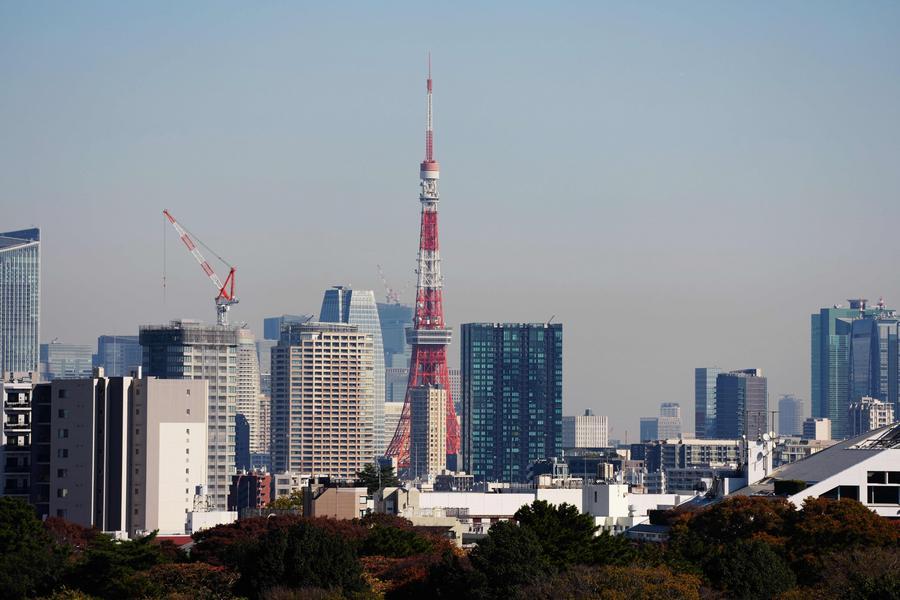
This photo shows the Tokyo Tower and the city view in Tokyo, Japan, Nov 17, 2025. [Photo/Xinhua]
For most people in Africa, Japan is synonymous with cutting-edge technology, economic prowess and social harmony. But in East Asia, which bears deep historical wounds inflicted by Japan, the country's right-leaning political shifts in recent years have triggered alarm.
To fully comprehend these regional apprehensions, one must reflect on the enduring historical lessons that continue to define regional geopolitics.
The regional anxieties over Japan's current trajectory stem from a legitimate historical fear across Asia: that neglecting and distorting wartime lessons might embolden Japan to reverse its postwar pacifist course and repeat past mistakes and crimes.
From the late 19th century until Japan's unconditional surrender in 1945, Japan emerged as the most aggressive imperialist and militarist power in modern Asia, waging unprovoked wars of aggression and occupying vast territories across China, the Korean Peninsula and Southeast Asia.
Japan's military expansion killed tens of millions and caused unprecedented humanitarian catastrophes across the region. The bitter memories of invasion and colonial oppression remain deeply entrenched in the national consciousness of Asian countries, especially China.
After Japan's defeat in 1945, the Allied powers instituted the Tokyo Trials, a landmark judicial proceeding that held Japanese wartime leaders accountable for their aggression and crimes against humanity.
The trials established a cornerstone of the postwar international order in East Asia, enshrining the principle that wars of conquest and colonial domination are illegal and unjust under international law.
Eighty years later, the verdict and lessons of the Tokyo Trials remain essential for preserving regional peace and deterring a militaristic revival.
Today's regional concerns are fueled by Japan's sustained and troubling political shift. Prime Minister Sanae Takaichi and her conservative supporters have vigorously pushed for constitutional revision, with a focused attempt to dismantle and rewrite Article 9 of Japan's Constitution.
As the foundational pillar of Japan's postwar pacifist identity, Article 9 explicitly renounces war and the use of force as a tool of national policy.
Attempts to revise, reinterpret, and hollow out this pacifist provision have triggered widespread skepticism and opposition across East Asia, as they challenge the postwar security framework of the region.
Alongside constitutional changes, Japan has sharply increased its military budget, expanded the operational scope of its Self-Defense Forces, relaxed arms export prohibitions, and deepened military alliances with the United States, Australia, and the Philippines.
While some Japanese politicians justify these moves as responses to security challenges, many observers in the region remain unconvinced by such arguments. These unilateral military advancements signal a creeping remilitarization, posing tangible risks to regional strategic balance.
China's assessment of Japan's strategic shifts is grounded in undeniable historical facts and shared regional trauma.
Chinese officials and historians have long highlighted that Japan has never fully come to terms with its wartime past. Certain Japanese political forces continue to downplay, whitewash, and distort the brutal wartime atrocities committed during Japan's imperial expansion era.
This refusal to sincerely reflect on wartime crimes is why China and other regional nations remain vigilant against Japan's growing military ambitions.
These concerns extend beyond military capabilities, carrying significant political and historical symbolism.
In East Asia, historical memory is not merely an academic subject; it is a pressing political and security issue affecting regional stability. Policy tweaks that seem trivial to outsiders often represent serious historical retrogression for countries that suffered under colonial occupation and wartime aggression.
African readers can relate to this regional dispute from the perspective of the global international order. China stands as the staunch defender of the 1945 postwar international framework established after the victory over fascism and militarism.
Chinese leaders have repeatedly emphasized that safeguarding the outcomes of World War II is crucial to upholding global justice and preventing the resurgence of aggressive militarism and extremist nationalism.
From China's perspective, any attempt to undermine the authoritative legacy of the Tokyo Trials and normalize Japan's military expansion essentially negates the victory of the World Anti-Fascist War and erodes the foundation of the postwar international order.
Faced with widespread criticism, Japanese authorities have denied the risk of militarist revival and offered self-serving excuses for the policy shifts. They claim to uphold peace, democracy and international law, and portray their military build-up as a rational response to regional tensions.
These assertions deliberately disconnect the current policies from the historical context, attempting to shake off historical restraints and whitewash Japan's military expansion agenda.
This divergence in the historical outlook is the root cause of escalating Sino-Japanese tensions. Both sides claim to pursue regional peace, but their starting points are vastly different.
China's vigilance against the revival of militarism is a solemn historical responsibility and a just commitment to regional peace. In contrast, Japan's continuous military strengthening and constitutional revisions serve its strategic goal of breaking free from postwar institutional constraints and pursuing the status of a full military power.
Africans can easily resonate with this historical logic based on the continent's own colonial experience. Across Africa, the legacy of colonial injustice continues to shape national identity and diplomatic perceptions. Former colonial powers are judged not only by current actions but by their sincerity in acknowledging and redressing historical wrongs.
Similarly, East Asia's geopolitical landscape is permanently shaped by collective memories of Japanese aggression, occupation and national resistance.
As Asia marks eight decades since the end of World War II, regional debates over Japan's future strategic role will continue to intensify. The prospect of regional cooperation versus intensified tensions hinges entirely on whether Japan can sincerely confront its wartime history, abandon historical revisionism, and faithfully abide by its pacifist commitments and the postwar international order.
The author is a Pan-Africanist political commentator based in Gweru, Zimbabwe.
相关文章
 亚甜婆婆在家抽水烟南方人物周刊记者 杨旻洁/图)一59岁的亚甜婆婆成了青福村第一个领取红娘奖金的人。2024年临近春节的1月19日,广东省茂名市青福村发了一条通知,表示从1月20日起,“凡给我村30岁2026-11-16
 饮食和交通费用是美国留学生活费中的固定支出,每月花费多少合理,受地区、消费习惯等因素影响。合理规划饮食和交通费用,能有效控制总生活费,避免不必要的糟蹋。一、饮食费用:不同消费方式,差距明显美国留学饮食2026-11-16
 美国不同专业的留学费用存在明显差异,其中商科、理工科、艺术类专业费用相对较高,文科、教育类专业费用相对较低。知道不同专业的费用差异,能帮助学生结合自身专业需求和预算,做出更合理的选择。一、热门专业费用2026-11-16
 △资料图黎巴嫩公共卫生部5月31日发表声明说,以色列当天对黎南部城市提尔一所医院附近区域发动空袭,造成13名医院工作人员受伤,医院设施遭严重破坏。声明说,这所医院此前曾在以军袭击中受损,此次袭击再次对2026-11-16
 2024年1月22日,湖南常德,桃源县迎降雪天气,杭瑞高速桃源县境内路段出现拥堵,近十公里车辆滞留。视觉中国/图)雪来的那晚,许喜俊全家围着火炉,一夜没睡。2024年1月21日深夜,每隔一两个小时,许2026-11-16
 此前,恩施电视台微信公众号发布文章讲述恩施市舞阳坝街道官坡社区园艺场发生滑坡前45分钟128名居民安全撤离无人伤亡的避险事件↓↓↓点击图片看详情今天,新华社微信公众号关注到此事称其为“教科书式”避险↓2026-11-16
最新评论