
Japan's political path worrisome for Asia
 我要评论
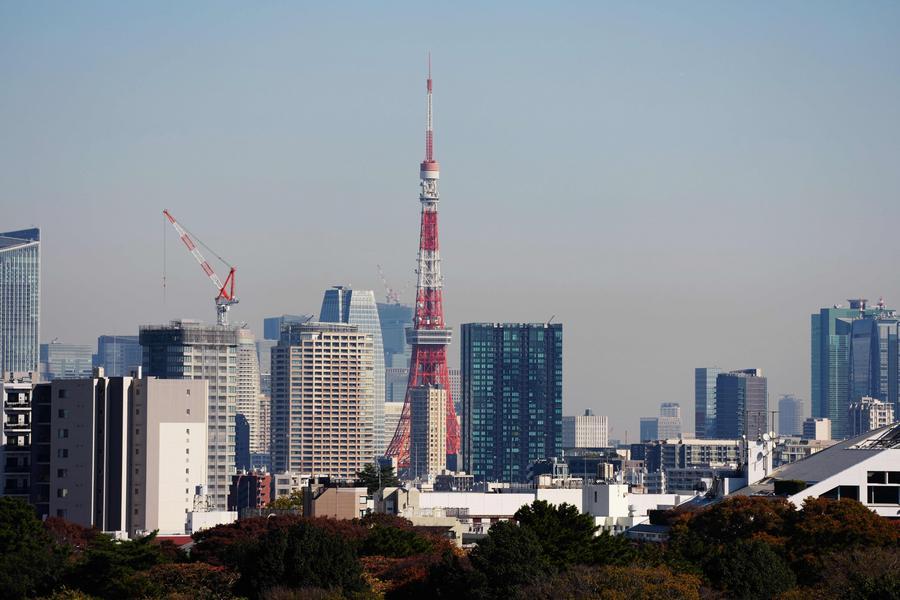
This photo shows the Tokyo Tower and the city view in Tokyo, Japan, Nov 17, 2025. [Photo/Xinhua]
For most people in Africa, Japan is synonymous with cutting-edge technology, economic prowess and social harmony. But in East Asia, which bears deep historical wounds inflicted by Japan, the country's right-leaning political shifts in recent years have triggered alarm.
To fully comprehend these regional apprehensions, one must reflect on the enduring historical lessons that continue to define regional geopolitics.
The regional anxieties over Japan's current trajectory stem from a legitimate historical fear across Asia: that neglecting and distorting wartime lessons might embolden Japan to reverse its postwar pacifist course and repeat past mistakes and crimes.
From the late 19th century until Japan's unconditional surrender in 1945, Japan emerged as the most aggressive imperialist and militarist power in modern Asia, waging unprovoked wars of aggression and occupying vast territories across China, the Korean Peninsula and Southeast Asia.
Japan's military expansion killed tens of millions and caused unprecedented humanitarian catastrophes across the region. The bitter memories of invasion and colonial oppression remain deeply entrenched in the national consciousness of Asian countries, especially China.
After Japan's defeat in 1945, the Allied powers instituted the Tokyo Trials, a landmark judicial proceeding that held Japanese wartime leaders accountable for their aggression and crimes against humanity.
The trials established a cornerstone of the postwar international order in East Asia, enshrining the principle that wars of conquest and colonial domination are illegal and unjust under international law.
Eighty years later, the verdict and lessons of the Tokyo Trials remain essential for preserving regional peace and deterring a militaristic revival.
Today's regional concerns are fueled by Japan's sustained and troubling political shift. Prime Minister Sanae Takaichi and her conservative supporters have vigorously pushed for constitutional revision, with a focused attempt to dismantle and rewrite Article 9 of Japan's Constitution.
As the foundational pillar of Japan's postwar pacifist identity, Article 9 explicitly renounces war and the use of force as a tool of national policy.
Attempts to revise, reinterpret, and hollow out this pacifist provision have triggered widespread skepticism and opposition across East Asia, as they challenge the postwar security framework of the region.
Alongside constitutional changes, Japan has sharply increased its military budget, expanded the operational scope of its Self-Defense Forces, relaxed arms export prohibitions, and deepened military alliances with the United States, Australia, and the Philippines.
While some Japanese politicians justify these moves as responses to security challenges, many observers in the region remain unconvinced by such arguments. These unilateral military advancements signal a creeping remilitarization, posing tangible risks to regional strategic balance.
China's assessment of Japan's strategic shifts is grounded in undeniable historical facts and shared regional trauma.
Chinese officials and historians have long highlighted that Japan has never fully come to terms with its wartime past. Certain Japanese political forces continue to downplay, whitewash, and distort the brutal wartime atrocities committed during Japan's imperial expansion era.
This refusal to sincerely reflect on wartime crimes is why China and other regional nations remain vigilant against Japan's growing military ambitions.
These concerns extend beyond military capabilities, carrying significant political and historical symbolism.
In East Asia, historical memory is not merely an academic subject; it is a pressing political and security issue affecting regional stability. Policy tweaks that seem trivial to outsiders often represent serious historical retrogression for countries that suffered under colonial occupation and wartime aggression.
African readers can relate to this regional dispute from the perspective of the global international order. China stands as the staunch defender of the 1945 postwar international framework established after the victory over fascism and militarism.
Chinese leaders have repeatedly emphasized that safeguarding the outcomes of World War II is crucial to upholding global justice and preventing the resurgence of aggressive militarism and extremist nationalism.
From China's perspective, any attempt to undermine the authoritative legacy of the Tokyo Trials and normalize Japan's military expansion essentially negates the victory of the World Anti-Fascist War and erodes the foundation of the postwar international order.
Faced with widespread criticism, Japanese authorities have denied the risk of militarist revival and offered self-serving excuses for the policy shifts. They claim to uphold peace, democracy and international law, and portray their military build-up as a rational response to regional tensions.
These assertions deliberately disconnect the current policies from the historical context, attempting to shake off historical restraints and whitewash Japan's military expansion agenda.
This divergence in the historical outlook is the root cause of escalating Sino-Japanese tensions. Both sides claim to pursue regional peace, but their starting points are vastly different.
China's vigilance against the revival of militarism is a solemn historical responsibility and a just commitment to regional peace. In contrast, Japan's continuous military strengthening and constitutional revisions serve its strategic goal of breaking free from postwar institutional constraints and pursuing the status of a full military power.
Africans can easily resonate with this historical logic based on the continent's own colonial experience. Across Africa, the legacy of colonial injustice continues to shape national identity and diplomatic perceptions. Former colonial powers are judged not only by current actions but by their sincerity in acknowledging and redressing historical wrongs.
Similarly, East Asia's geopolitical landscape is permanently shaped by collective memories of Japanese aggression, occupation and national resistance.
As Asia marks eight decades since the end of World War II, regional debates over Japan's future strategic role will continue to intensify. The prospect of regional cooperation versus intensified tensions hinges entirely on whether Japan can sincerely confront its wartime history, abandon historical revisionism, and faithfully abide by its pacifist commitments and the postwar international order.
The author is a Pan-Africanist political commentator based in Gweru, Zimbabwe.
相关文章
 吴清指出,“下一步监管重点突出两个字,一个是强,一个是严”。视觉中国/图时隔10年,国务院再次发出针对资本市场的核心“指令”。2024年4月12日,国务院印发《关于加强监管防范风险推动资本市场高质量发2026-11-23

高速收费员“暴铲”0.8吨泥,货车司机:“给你俩发到网上表扬一下”
“大热天得到你们的帮助太感人了!”“我得给你俩照张相叫我们老板发到网上表扬一下!”6月1日15时许杭州交投杭千高速新安江收费站入口一辆运载挖掘机的大件运输货车过磅称重时显示超重无法正常通行按照通行管理2026-11-23 楚天都市报极目新闻讯记者陈倩)湖北省发改委6月4日发布公告,根据近期国际市场油价变化情况和国家发改委调价信息,自2026年6月4日24时起,国内汽、柴油价格标准品)每吨分别下调525元、505元。湖北2026-11-23
 在这起杀妻案中,妻子曾起诉离婚未果。图片由何海宁使用AI工具生成“在法庭上很嚣张,没有道歉。”2026年6月初,受害人苗苗化名)的哥哥回想起庭审时的场景,仍然感到气愤和悲痛。他向南方周末记者回忆,凶手2026-11-23
 据澳媒报道,当地时间13日下午,澳大利亚悉尼一购物中心有人持刀行凶,已致6人死亡。警察已经封锁周边地区。据澳大利亚广播公司此前报道,已有7人在袭击中受伤被送往医院,包括一名9个月的婴儿。新南威尔士州急2026-11-23
 在近日举行的Digital Dragons会议上,《暗黑损坏神4》首席引擎工程师马尔钦·温达克公开夸赞了RPG游戏《光与影:33号远征队》。他表示,这款作品完美证明了一支规模虽小、但充满2026-11-23
最新评论